
Affordability a Key Theme in State of the State Addresses Across Region
Wednesday, February 11, 2026
Wednesday, February 11, 2026
By Anna Paolillo, ACT Policy Intern
Governors across New England have delivered their 2026 state of the state addresses, outlining key priorities that will shape administrative and legislative efforts this year. In a year when all six New England states will hold gubernatorial elections and five governors are seeking reelection, state of the state addresses offer a useful snapshot of the issues governors are prioritizing ahead of an increasingly political year.
Affordability, including energy affordability, remains one of the dominant themes, particularly given that the region’s energy costs are among the highest in the nation. Grid reliability and state climate goals also featured prominently, reflecting ongoing efforts to respond to federal rollbacks and attacks on clean energy.
In Massachusetts, Governor Maura Healey gave her 2026 State of the Commonwealth address on January 22. As anticipated, energy affordability continues to be a central theme of the governor's priorities.
In late 2025, the governor introduced her own energy affordability legislation, H.4144, An Act relative to energy affordability, independence, and innovation. The House is slated to release its own updated energy affordability package, which is expected to include many components of the Governor’s bill, within the coming few weeks.
On January 7, Governor Phil Scott of Vermont gave his State of the State address. Although energy was not a major theme of his address, Governor Scott has thrown his support behind proposals to ease the pathway to add more nuclear energy in the state.
Vermont also released its 2026 Annual Energy Report later in January. This report highlights rising energy costs as a key concern, as well as the inability to rely on federal funding in the near future. Accountability also dominated the policy recommendations outlined in the report, with recommendations to reduce costs to ratepayers without impacting greenhouse gas emissions mitigation efforts, facilitate utilization of distributed energy resources to avoid infrastructure constraints and reduce utility charges, and advocate for transparency and accountability in regional transmission costs.
In New Hampshire, Governor Kelly Ayotte gave her State of the State address on February 5. Energy policy was a notable theme of her address, but with a different approach than seen in other states. Ayotte, who is running for reelection in November, critiqued the other New England states’ approaches to clean energy, blaming their “net-zero religion” for high rates across the region.
A major theme of Gov. Ayotte's address was nuclear power and the role it could play in New Hampshire’s energy future. During her address, she directed the energy department to “build pathways to foster the next generation of nuclear power generation here in New Hampshire.” Although affordability wasn’t a key theme of her address, she did call on New Hampshire's Public Utilities Commission to “put the needs of ratepayers first."
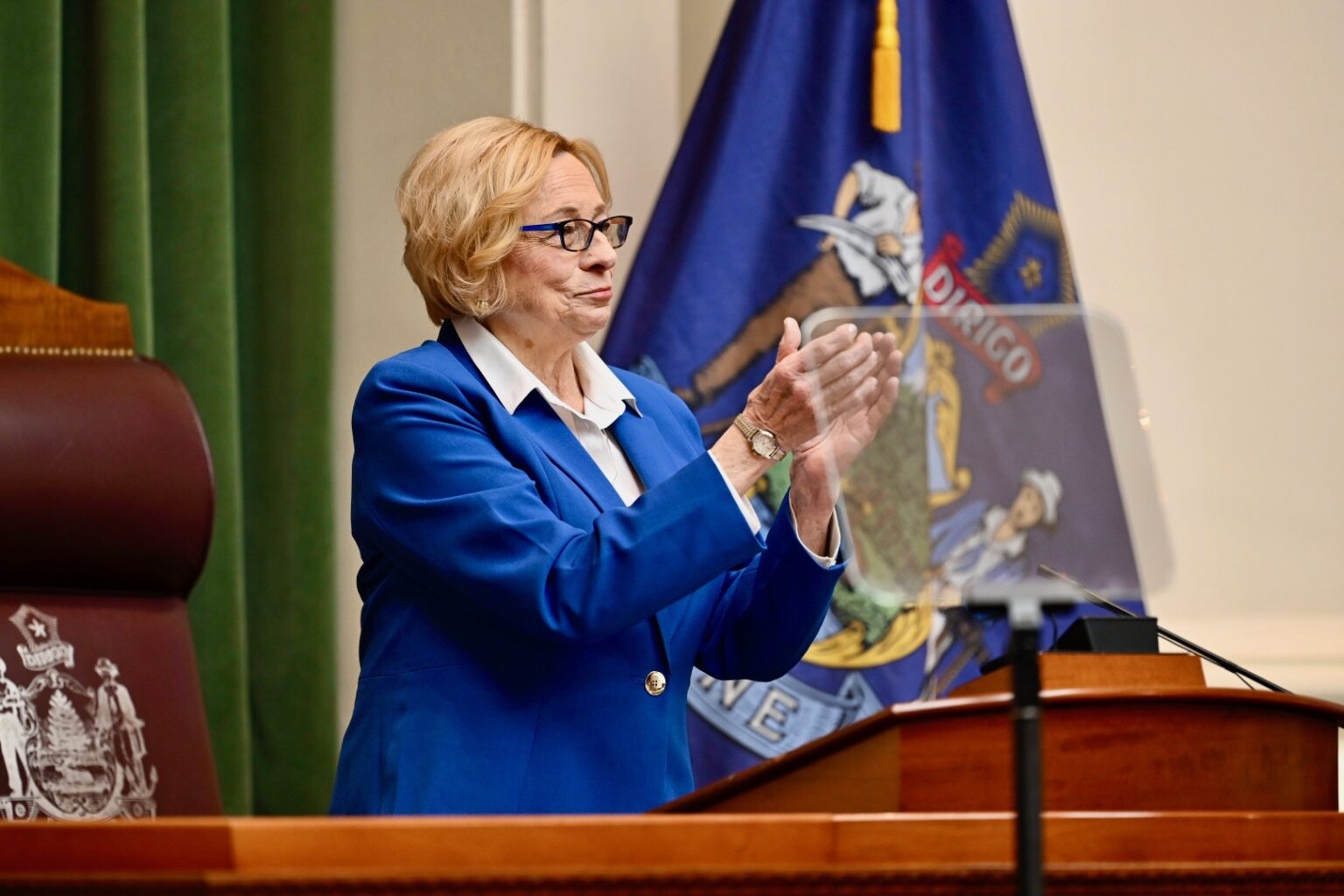
Governor Janet Mills of Maine gave her State of the State address on January 27. Energy affordability dominated the conversation once again, but Mills made it clear that “the high price of electricity is not (...) driven predominantly by renewable energy policies,” but rather by the overreliance on fossil fuels and natural gas. Mills also emphasized her commitment to diversifying the Maine grid with clean energy to offset natural gas.
Rhode Island Governor Daniel McKee also gave his State of the State address on January 13. Continuing the theme, Gov. McKee’s main focus was also energy affordability, citing Rhode Island’s struggles as the state experiencing the fourth-highest residential electricity rates in the nation. “Families are at their breaking point when it comes to energy costs,” McKee noted. Late last year, the Rhode Island PUC voted to provide $21 million in cuts to energy bills this year.
McKee mentioned his budget would include energy policy reforms and promised to reduce energy bills by 25%. The budget, HB.7127, was released on January 15, and despite its promises to reduce the energy bill, the budget takes many harmful, retroactive stabs at clean energy and efficiency programs.
In Connecticut, Governor Ned Lamont gave his State of the State address on February 4. This session will be a short session in Connecticut, only lasting around three months, meaning it's likely only high-priority topics will be heard or addressed. Energy is expected to be one of these topics.
Affordability was also a major theme of Lamont’s address. He framed high energy costs as a broader affordability challenge that is hurting consumers in every sector. Highlighting how recent cold snaps have worsened conditions for Connecticut ratepayers, Gov. Lamont proposed sending an energy rebate of about $400 to each family to help manage these rising costs.
Lamont also touched on the growing data center debate, praising his state's commitment to not allowing data centers unless they come with their own generation. Energy efficiency was emphasized in Lamont's address, stating he continues “to believe that energy efficiency reduces demand and reduces the electric bill” for Connecticut ratepayers.
Across the region, the 2026 State of the State addresses center on core issues affecting the clean energy industry, with energy affordability at the forefront. ACT’s advocacy will focus on advancing renewable energy, battery storage, and grid technologies as pathways to lower costs.
Image Caption: Maine Governor Janet Mills delivers her State of the State Address


.svg)
